Emergency funds: how much is actually enough?
Three months, six months, a year? A practical way to pick a number that fits your life instead of a rule of thumb.
Ask how big an emergency fund should be and you'll get a number of months. Which number depends on who you ask. The UK's MoneyHelper suggests three to six months of essential outgoings, as NS&I summarizes it. Germany's Verbraucherzentrale calls two to three months' pay a rule of thumb. The US Consumer Financial Protection Bureau doesn't give a number of months at all, and says the right amount depends on your situation.
They're all reasonable. They also disagree by a factor of three, which tells you the number has to come from your own life.
It matters, though. In the Federal Reserve's latest survey of household finances, 63% of US adults said they'd cover a surprise $400 expense with cash or its equivalent. The other 37% would have to borrow, sell something, or couldn't pay it.
Start with what actually goes wrong
The CFPB's advice is a good first step: think about the unexpected expenses you've actually had, and what they cost. For most people that's a car repair, a dentist, a broken phone or laptop, or a last-minute flight home. That gives you a first target, the cost of one bad surprise. Reaching it covers most of what life throws at you in a normal year.
Then the big number: months of essentials
The bigger fund is for losing your income. Work it out from essentials, not from what you spend now: rent, bills, food, insurance, transport and minimum debt payments. You'd cut the holidays and takeaways soon enough. Multiply that monthly figure by a number of months.
How many months is the real question. You can get away with fewer if:
- there are two incomes in the household and either could cover the essentials,
- your job is stable and people with your skills find work quickly,
- you'd get decent unemployment benefits.
Aim higher if you're self-employed, the only earner, or work in a field where jobs take months to find. Freelancers often keep more anyway, because a slow quarter is part of the job.
Where to keep it
Somewhere separate, safe and quick to reach. The Verbraucherzentrale recommends an instant-access savings account. Not your current account, where it quietly becomes spending money, and not invested, because emergencies like to arrive when markets are down.
Setting it up in Dribs
-
Find your essentials
In Insights, open a typical month and add up the essential categories in Expenses by Category: rent, groceries, utilities, insurance. With Dribs Pro, the Needs & Wants card does the sorting for you, and its Needs figure is close to the number you want.
-
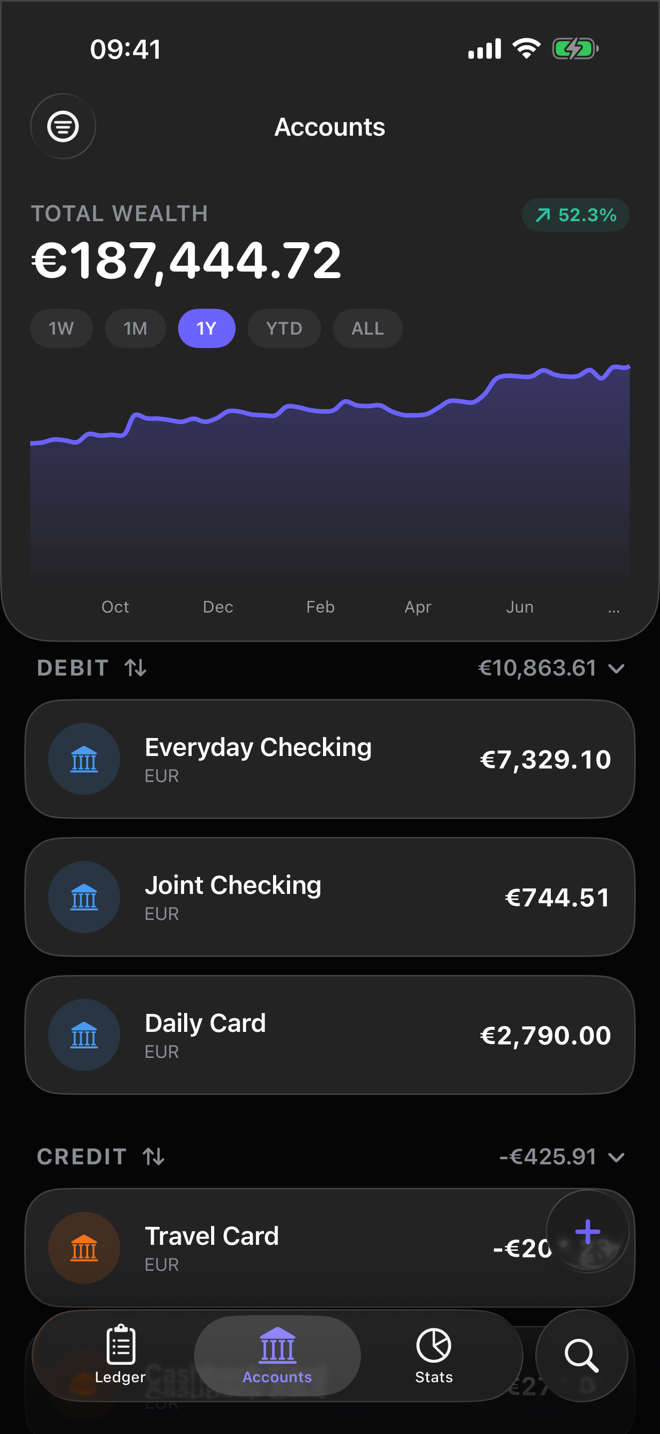
Give the fund its own account
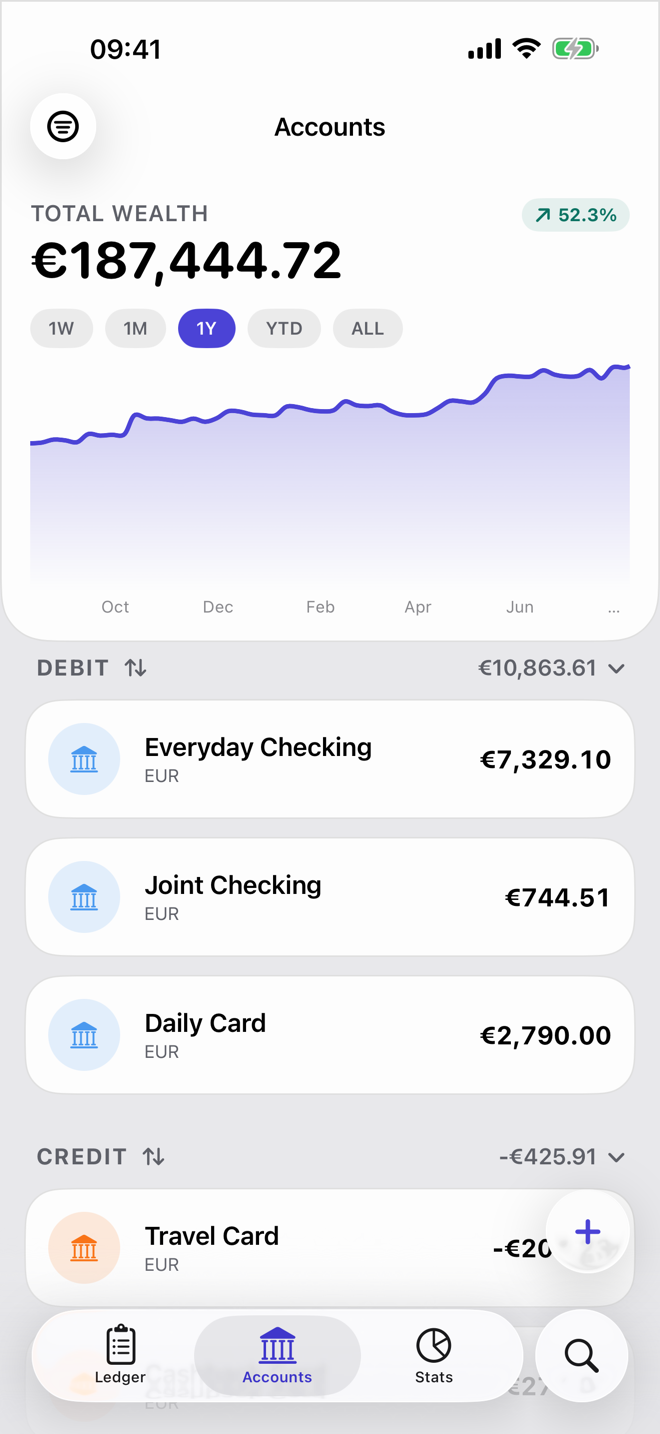
Add the account with the Savings type, so it counts towards your savings rate. If the fund is spread over several accounts, create a group in Settings → Groups and filter the Accounts tab by it to see the total and its history.
-
Set a target
With Dribs Pro, add a Savings Goal card in Insights, choose the fund's account under Wallets, and enter your target. The card shows how much you've saved and how much is left to go.
If six months of essentials feels out of reach, aim for the cost of your last bad surprise first. Then keep going.

Try it in Dribs
Free on the App Store for iPhone and iPad. No bank login, no account.
